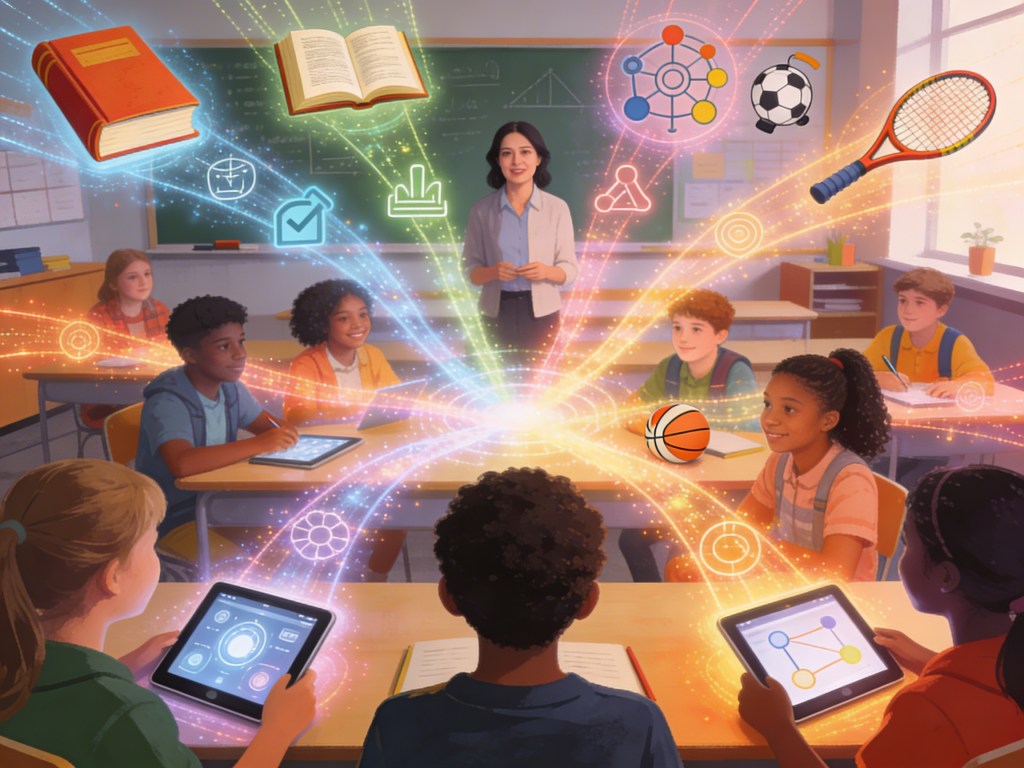
Literacy is traditionally defined as the ability to read and write, but in today’s world, it encompasses a much broader and more complex set of skills. At its core, literacy is the ability to understand, interpret, analyze, and create meaning from different forms of communication. This includes not only reading and writing, but also speaking, listening, viewing, and representing ideas across multiple formats. Literacy allows individuals to engage with information, think critically, and communicate effectively in both academic and real-world contexts.
In modern education, literacy is no longer limited to printed text. It includes various forms such as digital literacy, media literacy, and information literacy. Digital literacy involves the ability to navigate and use technology effectively, evaluate online sources, and communicate through digital platforms. Media literacy focuses on understanding and analyzing messages from different media sources, while information literacy involves locating, evaluating, and using information responsibly. Together, these forms of literacy prepare students to function in a technology-driven society where information is constantly evolving.
Literacy plays a foundational role in all areas of learning. Students depend on literacy skills to understand instructions, interpret problems, and demonstrate their knowledge across subjects. In mathematics, literacy is needed to comprehend word problems and explain reasoning. In science, students must read complex texts, analyze data, and communicate findings. In computer science, literacy takes on a unique form—students must learn to read and write code, understand technical vocabulary such as algorithms and variables, and explain their problem-solving processes clearly. Programming itself can be viewed as a type of language, requiring knowledge of syntax (structure), semantics (meaning), and logical organization.
Strong literacy skills also support critical thinking and problem-solving. When students read, they are not just decoding words; they are making connections, drawing inferences, and evaluating information. Writing allows them to organize their thoughts, clarify their understanding, and communicate ideas effectively. These skills are essential for collaboration, decision-making, and innovation, especially in fields like technology and engineering where clear communication and logical reasoning are crucial.
Furthermore, literacy is key to lifelong learning. In a rapidly changing world, individuals must continuously learn new skills, adapt to new technologies, and process new information. Literacy empowers people to seek out knowledge independently, evaluate its credibility, and apply it in meaningful ways. It also enables individuals to participate fully in society, from understanding news and policies to engaging in professional and community discussions.
In conclusion, literacy is much more than the ability to read and write—it is a comprehensive set of skills that enables individuals to understand the world, communicate effectively, and continue learning throughout their lives. As education continues to evolve, developing strong literacy skills across all subjects, including computer science, remains essential for student success and future readiness.
Citations:
UNESCO. (n.d.). What you need to know about literacy. https://www.unesco.org/en/literacy/need-know
American Library Association. (n.d.). Digital literacy. https://literacy.ala.org/digital-literacy/ EBSCO. (n.d.).
Digital literacy. https://www.ebsco.com/research-starters/education/digital-literacy
Connecticut State Library. (n.d.). Digital literacy definitions. https://libguides.ctstatelibrary.org/dld/digliteracy Beecher, C. (2023). What is literacy? Multiple perspectives on literacy.
Iowa State University Pressbooks. https://iastate.pressbooks.pub/teachingearlyliteracy/chapter/what-is-literacy-multiple-perspectives-on-literacy/
 Devan Gillaird
Leave a comment